

Chief Information Officer
I'd like to talk about data and system security.
Wait, wait... come back... don't scroll past just yet!!
I know that opening line might not be the most riveting start to an article you've ever seen, but it's a vital topic in the world of dealership data and, if I promise to try and make this as concise and informative as possible, would that convince you to give up a few minutes to hear something I think is important?
In the last six months, we've hit two significant milestones with regard to how we protect your data - and our own.
Titan DMS has achieved both ISO/IEC 27001:2022 certification and SOC 2 Type I attestation.
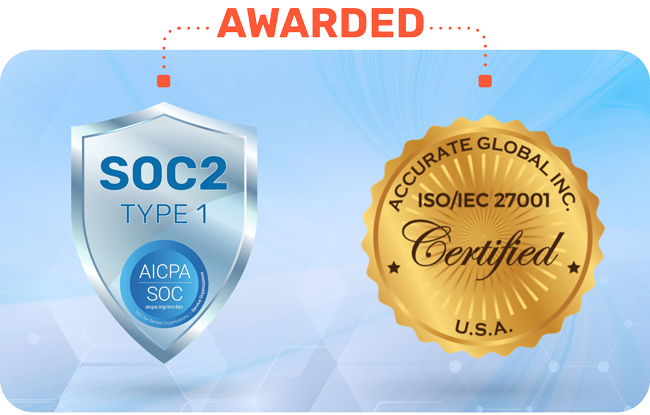
Now, I appreciate those acronyms don’t exactly jump off the page. But behind them sits something very real: a significant investment in the foundations of our business - done deliberately so our customers can operate with confidence, not concern.
Because while security is often invisible when things are working well, it becomes the only thing that matters when they’re not.
What these certifications actually mean
At a high level, both ISO 27001 and SOC 2 are independent validations of how we manage and protect information.
But they look at the problem from slightly different angles.
- ISO/IEC 27001:2022 focuses on how we run security as a system
- SOC 2 Type I focuses on whether our controls are properly designed and implemented at a point in time
Put simply: one ensures we have the right structure in place, the other verifies that the controls within that structure are correctly designed.
What it took to achieve them
These aren’t badges you win, they’re standards you build towards.
Achieving ISO 27001 required us to implement a formal Information Security Management System (ISMS) across the business. That includes:
- Identifying and assessing risks across all data and systems
- Defining ownership and accountability at every level
- Implementing controls across people, processes, and technology
- Embedding continuous monitoring, auditing, and improvement
SOC 2 Type I then required us to demonstrate that these controls are:
- Clearly defined
- Appropriately designed
- Properly implemented
This involved independent assessment of areas such as:
- Access control
- System monitoring
- Change management
- Incident response
- Vendor management
Why this matters to your dealership
Security conversations can be abstract and, I get it, a bit tedious - until something goes wrong. So let’s bring it back to what this means in practical terms for you.
1. You’re not taking our word for it
Anyone can say “we take security seriously.”
These certifications mean an independent external auditor has verified it.
For a dealership, that removes a layer of uncertainty. Titan DMS has met validated, audited standards.
2. Your data is governed, not just stored
ISO 27001 requires us to formally define:
- What data we hold
- Where it resides
- Who owns it
- Who can access it - and why
SOC 2 Type I verifies that those controls:
- Exist
- Are appropriately designed
- Align with recognised Trust Services Criteria
3. Every access and change is designed to be accountable
Both standards place strong emphasis on control and traceability.
SOC 2 Type I assesses whether:
- User access controls are properly defined
- Logging and monitoring mechanisms are in place
- Change processes are structured and controlled
For your dealership, that means:
- Clear visibility into how systems are governed
- Reduced risk of unauthorised access
- Confidence that accountability is built into the platform
4. Issues are handled through defined, structured processes
ISO 27001 requires formal incident management frameworks:
- Defined response procedures
- Clear ownership and escalation
- Continuous review and improvement
SOC 2 Type I validates that these processes are:
- Established
- Documented
- Ready to be executed
So if something does happen:
- There’s a structured response - not improvisation
- Responsibilities are clear from the outset
- The process is already in place, not created under pressure
5. Change is controlled before it reaches your dealership
Updates and enhancements are part of any modern platform - but they must be managed carefully.
Both certifications require disciplined change management:
- Changes must be reviewed and approved
- Risks must be assessed
- Testing must be completed before release
SOC 2 Type I confirms that this framework is properly designed.
The benefit to you:
- Greater platform stability
- Reduced risk of disruption following updates
- Confidence that changes are introduced in a controlled, predictable way
6. Third-party connections are assessed - not assumed safe
Dealership systems don’t operate in isolation.
ISO 27001 requires us to formally assess and manage the risk of:
- Suppliers
- Integration partners
- External service providers
SOC 2 Type I verifies that:
- Vendor risk processes are defined
- Controls around third-party access are in place
So when your DMS connects to:
- OEM systems
- Finance platforms
- External tools
You can be confident those connections are:
- Evaluated
- Controlled
- Managed within a structured security framework
Focus on foundations
Most of the time, you won’t notice the work that sits behind these certifications. When your systems are running, your teams are productive, and your customers are being served - that’s security doing its job properly.
These certifications demonstrate that:
- Security is systematically managed (ISO 27001)
- Controls are properly designed and independently validated (SOC 2 Type I)
For dealerships, that translates into confidence your systems are built on a controlled, well-governed, and independently assessed foundation.
Security might not often be the story that grabs most attention, but it is important - and hopefully, if you made it this far, you agree!
Ian Gillot
Chief Information Officer

Published:
July 16, 2026
Updated:
June 25, 2026